
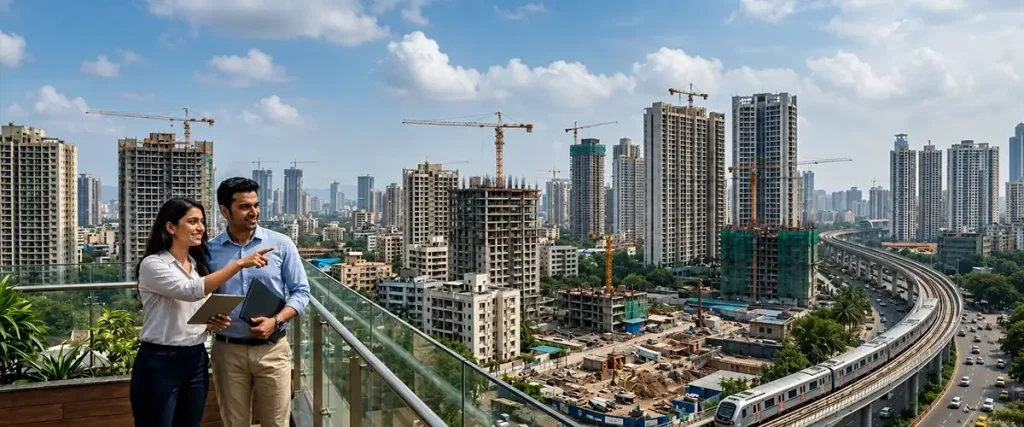
Infrastructure plays an important role in shaping where people choose to live. Road networks, railway stations, metro services, schools, hospitals and reliable utility services can make a neighbourhood more convenient for everyday life.
As cities expand, improvements in infrastructure can also influence housing demand in surrounding areas. Better connectivity may attract residents who want shorter commutes, while access to workplaces and essential services can make a location suitable for long-term living. However, infrastructure alone does not determine property demand or prices. Buyers should also consider affordability, neighbourhood conditions, construction quality and the availability of essential services.
Table of Contents
- Understanding Infrastructure Development
- How Infrastructure Influences Housing Demand
- Types of Infrastructure That Matter to Homebuyers
- How Infrastructure Can Influence Property Values
- What Homebuyers Should Check Before Choosing a Location
- Common Mistakes to Avoid
Understanding Infrastructure Development
Infrastructure development refers to the creation, improvement and maintenance of facilities and networks that support daily life and economic activity. It includes transport systems, roads, electricity, water supply, drainage, sanitation and public services.
In India, infrastructure planning often brings together several connected systems. The Government of India’s PM GatiShakti National Master Plan focuses on integrated planning across transport networks and other infrastructure to improve connectivity and support economic activity.
For the housing sector, these improvements matter because people need more than a home within their budget. They also need practical access to workplaces, education, healthcare, shopping and public transport. When these facilities are available and functioning well, an area may become more attractive to different groups of homebuyers.
How Infrastructure Influences Housing Demand
1. Better Connectivity Can Expand Residential Choices
Connectivity is one of the main factors that buyers consider when comparing locations. Roads, railway networks, metro systems and bus services affect how easily residents can travel between their homes and daily destinations.
Improved transport links may make areas beyond established city centres more accessible. Some buyers may consider these locations because they offer an alternative to living close to crowded business districts, particularly when public transport or road access supports their regular commute.
However, the usefulness of a transport project depends on its route, operating schedule, travel time and last-mile connectivity. A nearby station may offer limited convenience if residents cannot reach it easily from their homes.
2. Employment Centres Can Attract More Residents
Industrial areas, business districts, commercial centres and logistics hubs create employment opportunities. When these workplaces are connected to nearby residential neighbourhoods, people working in these areas may look for homes within a manageable commuting distance.
Infrastructure that connects employment centres with surrounding locations can therefore influence where people choose to rent or buy homes. This relationship can be particularly relevant to workers who prioritise travel time and daily commuting costs.
Nevertheless, employment growth does not automatically translate into higher housing demand in every nearby locality. The availability of suitable homes, transport options and other neighbourhood facilities also affects residential choices.
3. Essential Services Support Everyday Living
Access to schools, hospitals, grocery shops, pharmacies, parks and other everyday facilities can influence how suitable an area feels for family living. Buyers may prefer neighbourhoods where important services are available without lengthy or complicated journeys.
Basic utilities are equally important. Reliable water supply, electricity, drainage and sanitation contribute to the practical usability of a residential area. The Government of India’s Pradhan Mantri Awas Yojana Urban identifies facilities such as drinking water, power supply, sewerage and toilets as important housing provisions.
For buyers, the key consideration is whether these services are available and dependable, rather than simply listed in a future development plan.
4. Infrastructure Can Support Growth in Emerging Areas
New transport links and public facilities can make previously less accessible areas easier to reach. As connectivity improves, developers, businesses and residents may show greater interest in these locations.
This can lead to changes in the type and availability of housing, local shopping facilities and other services. However, the pace of change varies by location. Some areas may develop gradually, while others may face delays in infrastructure delivery or limited demand despite planned improvements.
Types of Infrastructure That Matter to Homebuyers
Different infrastructure facilities influence residential choices in different ways. The following table shows what buyers should consider when evaluating a location.
| Type of Infrastructure | Possible Influence on Housing Demand | What Buyers Should Check |
| Roads and highways | Can improve access to workplaces and nearby areas | Actual travel time, traffic and road conditions |
| Metro and railway networks | Can support regular commuting and access to major destinations | Operational status, station access and service frequency |
| Bus services | Can improve local and wider public transport access | Routes, frequency and stop locations |
| Schools and hospitals | Can make a neighbourhood more suitable for daily family needs | Distance, accessibility and available facilities |
| Water, electricity and drainage | Can support reliable day-to-day living | Existing supply, service reliability and infrastructure capacity |
| Commercial and employment centres | Can increase residential interest among nearby workers | Employment access, commute options and local housing supply |
| Parks and public spaces | Can improve access to recreation and outdoor activities | Maintenance, safety and public accessibility |
How Infrastructure Can Influence Property Values
Infrastructure improvements may influence property values by changing accessibility and the attractiveness of a location. For example, an operational transport connection may make a neighbourhood more practical for people who travel regularly to work. Better access to essential services may also broaden the range of buyers interested in the area.
Demand and prices, however, depend on several factors. Housing supply, affordability, property condition, local employment, access to services and wider market conditions all play a part.
The stage of infrastructure development also matters. An announcement is different from a project under construction, and both differ from an operational facility. Buyers should understand the current status and expected timelines before treating proposed improvements as a reason to purchase a home.
It is also important to assess the possible disadvantages. Major roads may increase noise and traffic near certain properties, while construction activity can create temporary disruption. A location that offers transport convenience may still have drainage problems, limited parking or inadequate public facilities.
Infrastructure should therefore be one part of a broader property assessment, not the only basis for estimating future value.
What Homebuyers Should Check Before Choosing a Location
Evaluate Existing Connectivity
Check the actual routes between the property, workplace, railway station, public transport stops and other regular destinations. Visit the area during peak hours where possible, as travel conditions can differ considerably throughout the day.
Confirm the Status of Planned Infrastructure
Use official government, transport authority or municipal sources to check whether a proposed road, metro line or other facility is announced, approved, under construction or operational. Review published timelines carefully instead of assuming that a planned facility will be available by a particular date.
Review the Neighbourhood’s Basic Services
Visit the locality and assess water supply, electricity, drainage, road maintenance, waste collection and access to essential shops. These facilities affect everyday convenience regardless of future infrastructure plans.
Compare the Property With Your Budget
A well-connected location may suit your routine, but the property must also fit your financial plans. Compare the total purchase cost, applicable charges, maintenance expenses and expected travel costs. Consider how the home meets your household’s needs over the long term.
Look at the Overall Residential Environment
Check traffic levels, noise, road safety, open spaces and the condition of surrounding buildings. Speak with residents where appropriate to understand day-to-day conditions that may not be apparent during a brief site visit.
Common Mistakes to Avoid
One common mistake is choosing a property based entirely on a proposed infrastructure project. Announcements and plans do not necessarily indicate when a facility will become operational or how useful it will be to residents.
Another mistake is measuring connectivity only by distance. A property may be close to a railway station or main road but still require a difficult journey to reach it. Travel time, route quality and available transport options provide a more complete picture.
Buyers should also avoid overlooking existing neighbourhood conditions. Improved connectivity cannot replace dependable utilities, suitable housing layouts, sound construction or the availability of essential services. Similarly, assuming that better infrastructure will always result in higher property prices can lead to unrealistic expectations.
A balanced decision considers both the current living environment and the realistic potential of future improvements.
Explore Your Homebuying Options
When comparing residential properties, consider the location, connectivity, available facilities, home specifications and total purchase cost together. Visit www.metrobuildcon.in or contact +91 9975970295 for information about Metro Buildcon’s residential offerings.